
This sheet pan salmon gives you a complete, flavor-packed dinner with tender salmon, roasted vegetables, and minimal cleanup—all on one pan in about 45 minutes.
For more Easy Salmon Dinners, try our Salmon Bowls, Salmon Orzo, or Roasted Za'atar Salmon.
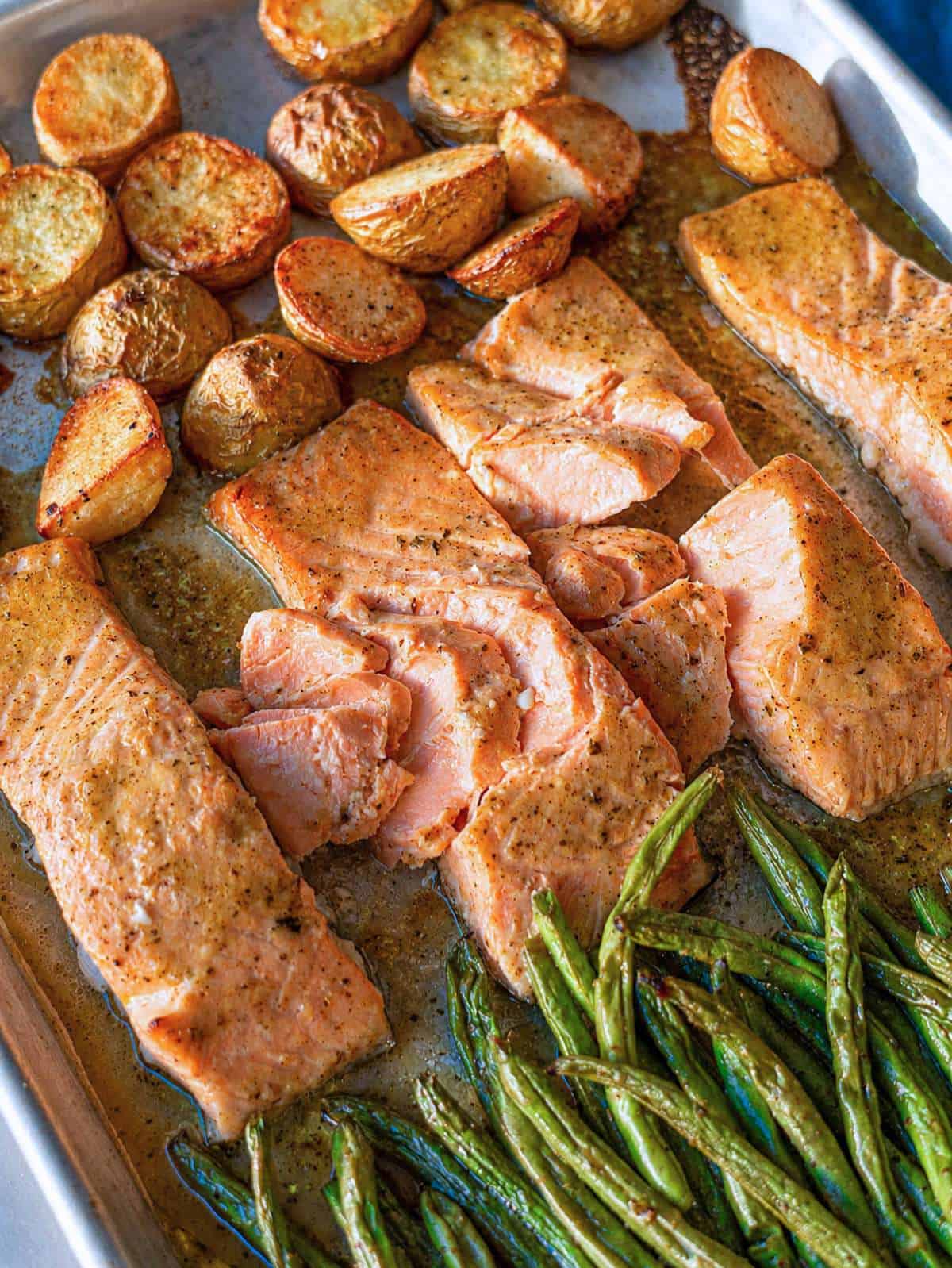

Why You'll Love This Sheet Pan Salmon with Potatoes and Green Beans
This Easy Sheet Pan Salmon with Vegetables exists for one reason: to make a wholesome, satisfying dinner feel almost effortless. 🐟
Louise and I love recipes that give us plenty of vegetables, a good source of protein, and big flavor without leaving a sink full of dishes behind. This one checks all the boxes. Everything cooks on one pan, and the honey mustard lemon sauce does most of the heavy lifting.
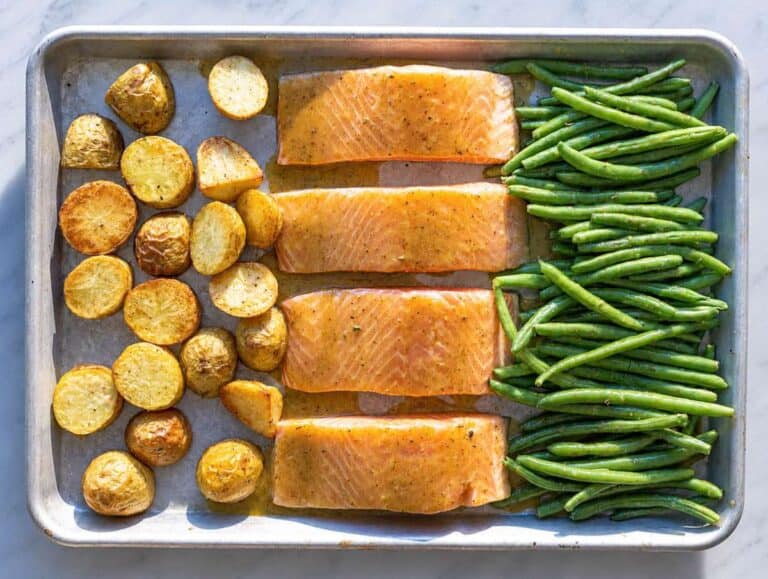
The salmon comes out tender and juicy, the potatoes turn golden around the edges, and the green beans soak up the flavorful pan juices. As everything roasts together, the sauce creates a delicious coating that's perfect for spooning over the salmon before serving. 🍋
What I especially love about this recipe is that it feels like a complete meal without requiring much planning. It's simple enough for a busy Tuesday night, yet good enough to serve when friends or family stop by. The ingredients are easy to find, the steps are straightforward, and the results are consistently reliable.
If you're looking for a protein-rich, veggie-packed dinner that fits easily into a balanced, Mediterranean-style eating pattern, this sheet pan salmon is one of those recipes you'll come back to again and again. 😊
P.S: Looking for more easy fish dinners? Try our Baked Cod, Tuscan Cod, or Tuna Steak.
Nico Pallotta
Ingredients
For quantities, see recipe card at the bottom of the page.
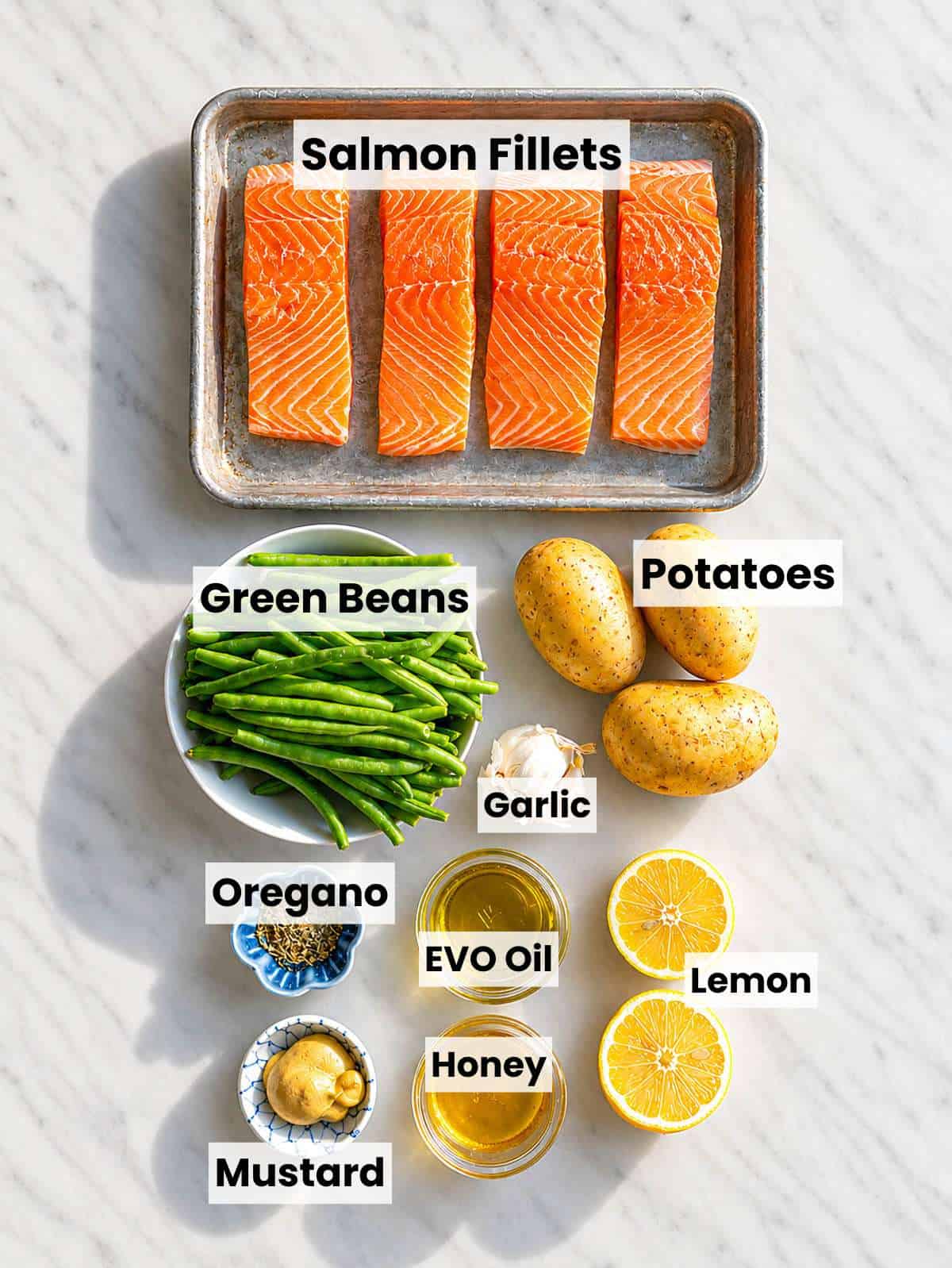
- Salmon: Fresh or frozen salmon both work well in this recipe. Thaw frozen salmon overnight in the refrigerator before cooking for the best texture. Substitute steelhead trout, cod, halibut, or another firm fish.
- Potatoes: They roast until golden and make this meal hearty and satisfying. Yukon Gold, red potatoes, baby potatoes, or sweet potatoes all work well.
- Green beans: Add color, texture, and extra vegetables to this one pan salmon meal. Substitute broccoli florets, asparagus, zucchini chunks, Brussels sprouts, or sugar snap peas.
- Olive oil: Helps the vegetables roast and adds richness to the sauce. Substitute avocado oil or another neutral cooking oil.
- Dijon mustard: Gives the sauce its tangy flavor and helps it cling to the salmon. Substitute whole grain mustard or spicy brown mustard.
- Honey: Balances the mustard and lemon with a touch of sweetness. Substitute maple syrup or agave nectar. If you prefer to avoid added sweeteners, you can leave it out and add an extra teaspoon of olive oil to keep the sauce balanced.
- Lemon juice: Brightens the sauce and complements the fish beautifully. Substitute lime juice or a splash of white wine vinegar.
- Garlic: Adds savory depth to this healthy salmon dinner. For garlic-intolerant use garlic-infused olive oil or skip.
- Dried oregano: Adds a subtle Mediterranean-inspired flavor. Substitute Italian seasoning, thyme, dill, or parsley.
- Salt and black pepper: Essential for bringing all the flavors together. Adjust to taste.
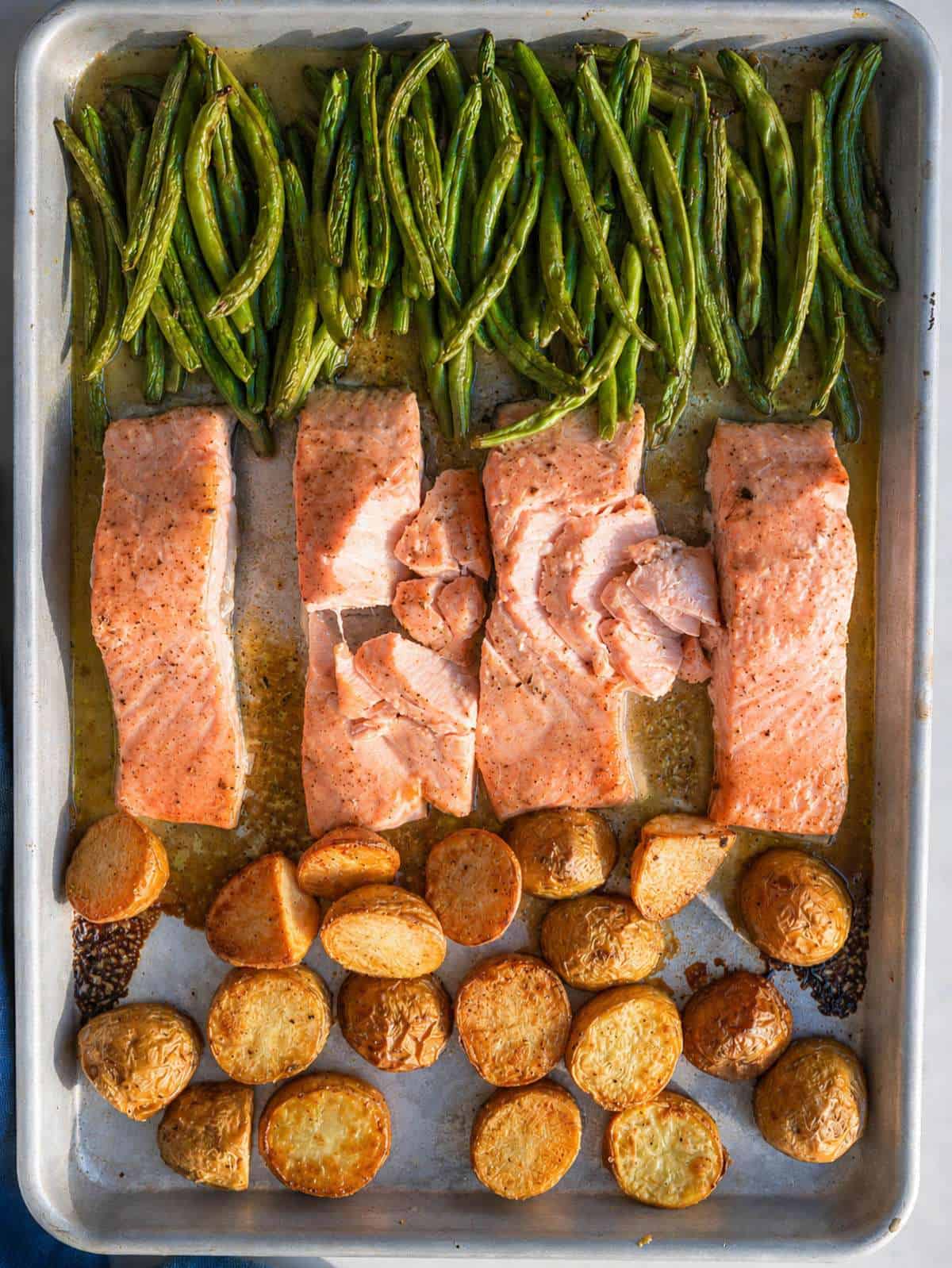
How to Make Sheet Pan Salmon
Step 1. Roast the Potatoes
Preheat the oven to 425°F (220°C). Lightly oil a large sheet pan.
Cut the potatoes into bite-size chunks, about 1 inch. Add them to the pan with olive oil, salt, and black pepper.
Toss well, then spread them out in a single layer. Bake for 15 minutes, or until they start to soften and turn golden at the edges.

Step 2. Make the Honey Mustard Sauce
While the potatoes roast, make the sauce.
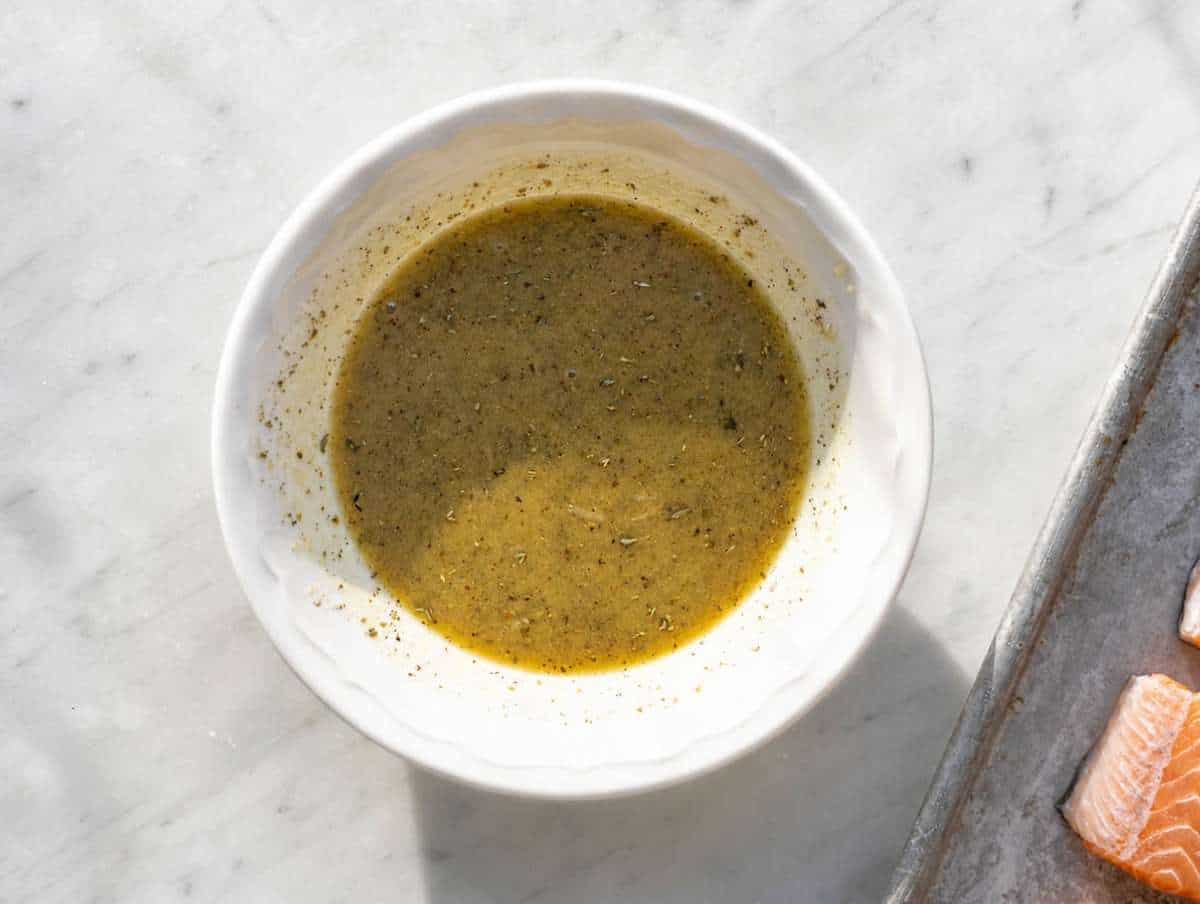
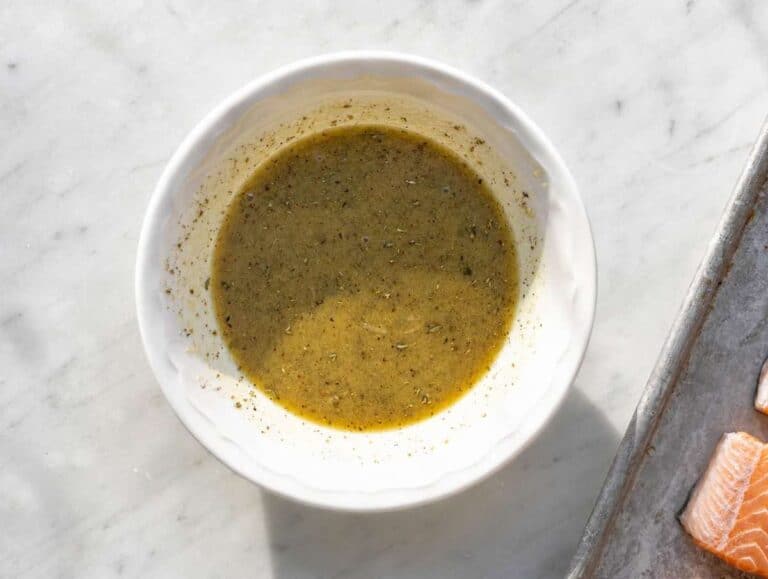
In a small bowl, whisk together olive oil, Dijon mustard, honey, lemon juice, grated garlic, dried oregano, and salt.
The sauce should taste bright, tangy, and a little sweet. It will flavor both the salmon and the vegetables.
Step 3. Add the Salmon and Green Beans
Remove the pan from the oven. Add the green beans and salmon fillets to the pan.
Toss the green beans with a few spoonfuls of sauce. Brush the rest of the sauce generously over the salmon.
This is what makes the salmon and potatoes taste flavorful, not plain.
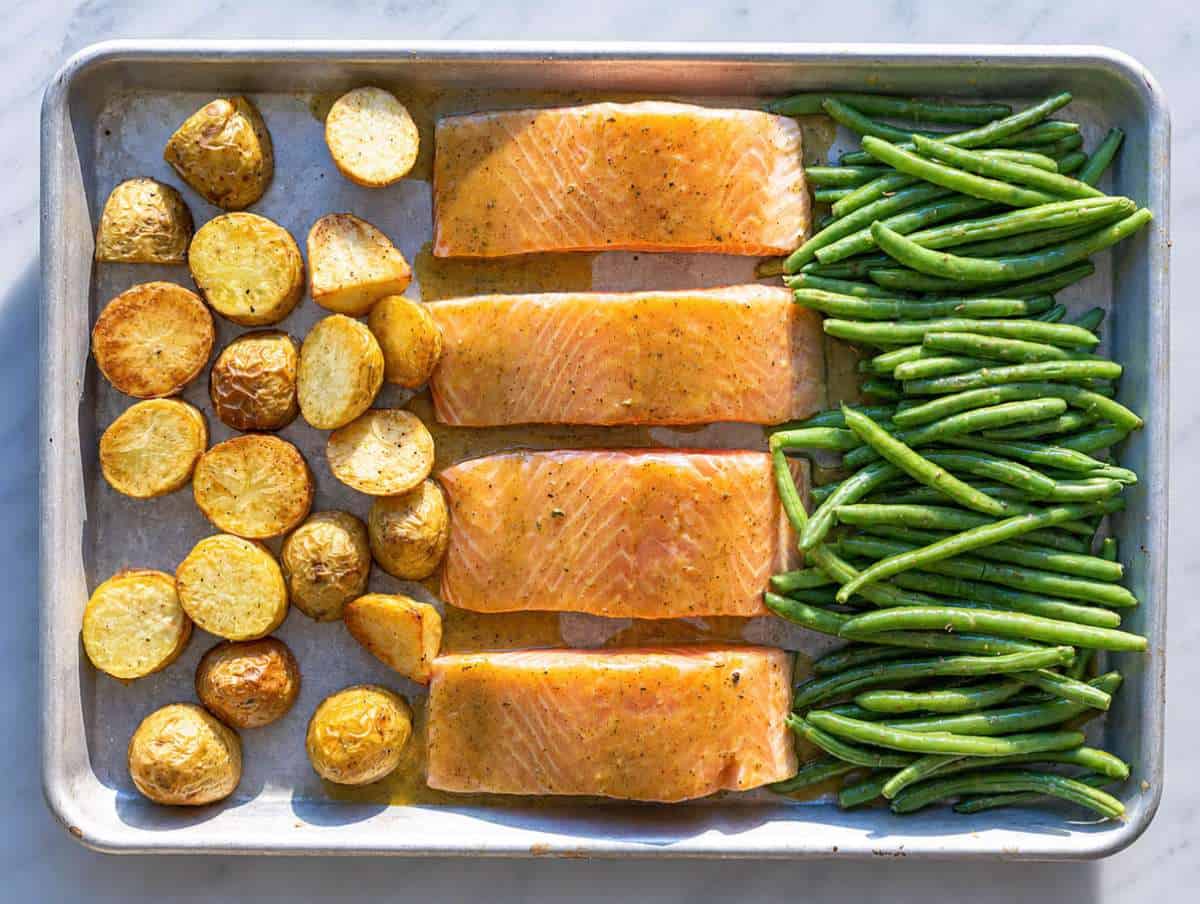
Step 4. Bake Until Tender
Return the pan to the oven and bake for 12 to 18 minutes, depending on the thickness of your salmon.
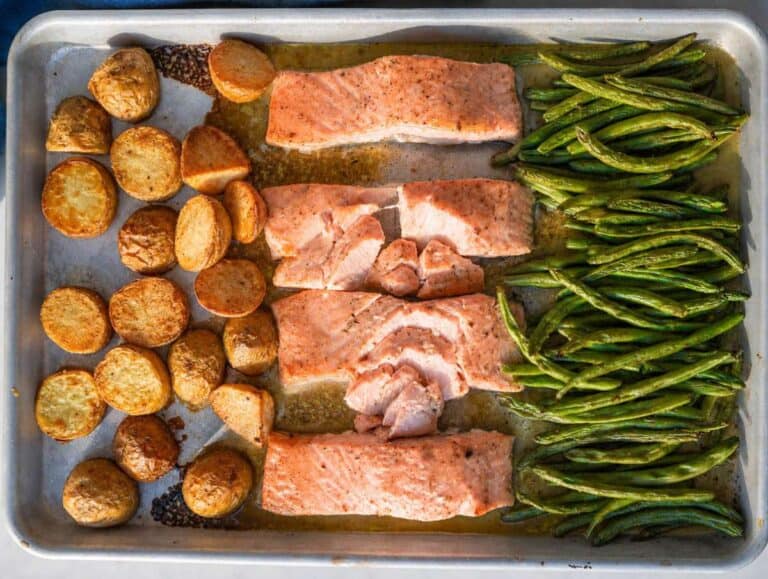
The salmon is ready when it flakes easily with a fork and reaches 145°F (63°C) in the thickest part.
If the salmon is done but the green beans need more time, transfer the salmon to a plate. Put the vegetables back in the oven for a few more minutes.
Divide the salmon, potatoes, and green beans among plates. Spoon any extra honey mustard sauce from the pan over the salmon and vegetables before serving.
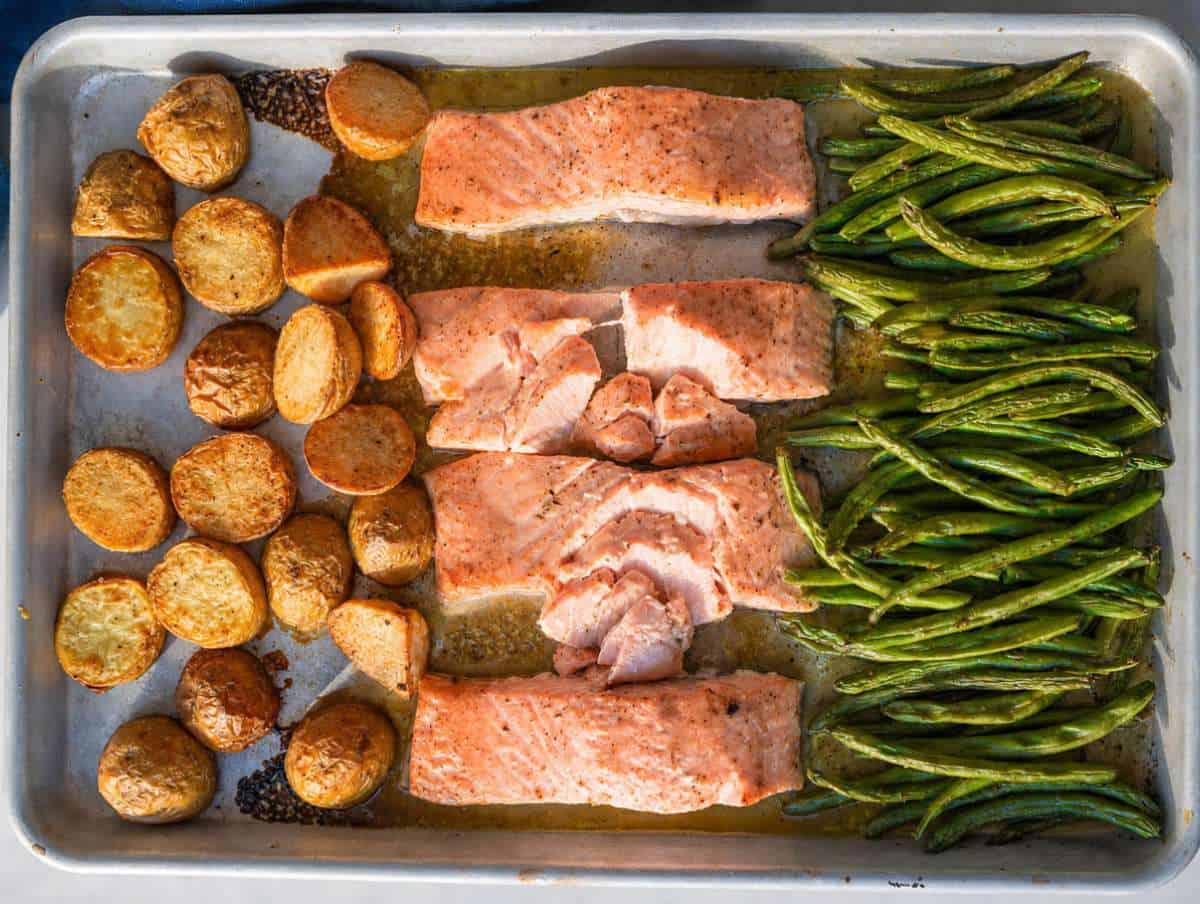
Tips
- Cut the potatoes evenly: Try to keep the pieces about the same size so they cook at the same rate.
- Pat the salmon dry: This helps the honey mustard sauce stick better and encourages better browning.
- Don't overcrowd the pan: Spread everything out in a single layer so the vegetables roast instead of steam. The green beans can overlap a bit.
- Use a thermometer if you have one: Salmon is cooked when it reaches 145°F (63°C) in the thickest part.
- Spoon the pan sauce over everything: Don't leave those flavorful juices behind. They make the salmon and vegetables even better.
- Frozen green beans work well: Add them straight from the freezer. They may need a few extra minutes in the oven.
- Adjust for thicker salmon: Thick center-cut fillets can take several minutes longer than thinner pieces near the tail.
- Add fresh lemon before serving: A squeeze of lemon brightens the honey mustard sauce and makes the flavors pop.
- Store leftovers for lunch: Leftover salmon and vegetables keep well in the refrigerator for up to 2 days and make an easy next-day meal.
Frequently Asked Questions
Yes. For the best texture, thaw the salmon overnight in the refrigerator and pat it dry before adding the sauce. This helps the fish roast instead of steam.
Absolutely. Add them straight from the freezer. They may need a few extra minutes in the oven compared to fresh green beans.
This oven baked salmon and vegetables recipe is flexible. Try broccoli, asparagus, Brussels sprouts, zucchini, cauliflower, or bell peppers.
The salmon should flake easily with a fork and reach 145°F (63°C) in the thickest part. Thicker fillets may need a few extra minutes.
Yes. The sauce can be mixed up to 3 days in advance and stored in an airtight container in the refrigerator.
Yes. You can substitute maple syrup or simply leave the honey out for a more tangy and savory flavor.
Store leftover salmon and vegetables in an airtight container in the refrigerator for up to 2 days. Reheat gently in the microwave or a 350°F oven until warmed through.
This easy sheet pan dinner is a complete meal on its own, but it also pairs well with a simple green salad, cooked grains, or crusty bread.
More Mediterranean Dinner Recipes
- Mediterranean Couscous Salad
- Mediterranean Chicken
- Greek Chicken
- Greek Shrimp Orzo
- Mediterranean Chicken Bowl
- Mediterranean Chicken and Rice Stir Fry
- Chicken Souvlaki
- Easy Greek Lemon Chicken
Tried this Sheet Pan Salmon recipe? We'd love to hear what you think! Leave a 🌟 star rating and drop a comment below—we read every single one. 💬💛
Recipe
Easy Sheet Pan Salmon with Vegetables (Healthy Dinner)

Ingredients
- 4 salmon fillets (5 to 6 ounces each / 140 to 170 g each); skin on or off
- 1 pound potatoes cut into 1-inch chunks, or halved baby potatoes
- 12 ounces green beans trimmed; frozen green beans work too
Honey Mustard Lemon Sauce
- 3 tablespoons extra virgin olive oil plus 1 tablespoon for the potatoes
- 3 tablespoons lemon juice
- 2 tablespoons Dijon mustard
- 2 tablespoons honey
- 3 cloves garlic grated or minced
- ½ teaspoon dried oregano
- ½ teaspoon salt and black pepper – adjust to taste
Instructions
- Roast the potatoes: Preheat the oven to 425°F (220°C).Add 1 pound potatoes cut into 1-inch chunks. Toss with 1 tablespoon olive oil, ½ teaspoon salt, and ¼ teaspoon black pepper. Spread them out in a single layer.Bake for 15 minutes.

- Make the sauce: In a small bowl, whisk together 3 tablespoons extra virgin olive oil, 3 tablespoons lemon juice, 2 tablespoons Dijon mustard, 2 tablespoons honey, 3 cloves garlic, ½ teaspoon dried oregano, ½ teaspoon salt, and black pepper.
- Add the salmon and green beans: Remove the pan from the oven. Push the potatoes to one side of the pan. Add 12 ounces green beans and 4 salmon fillets.Toss the green beans with a few spoonfuls of the sauce. Spoon the remaining sauce generously over the salmon.
- Finish and serve: Bake for 12 to 18 minutes, depending on the thickness of the salmon, until it flakes easily with a fork and reaches 145°F (63°C) in the thickest part.If the green beans need a few more minutes, transfer the salmon to a plate and return the vegetables to the oven until tender.Divide the salmon and vegetables among plates. Spoon any extra honey mustard sauce from the pan over the salmon and vegetables before serving with lemon wedges.

Notes
- Salmon → Steelhead trout, cod, halibut, or another firm fish. Frozen salmon works too; thaw overnight in the refrigerator first.
- Potatoes → Yukon Gold potatoes, red potatoes, baby potatoes, or sweet potatoes.
- Green beans → Broccoli florets, asparagus, zucchini chunks, Brussels sprouts, or sugar snap peas.
- Olive oil → Avocado oil or another neutral cooking oil.
- Dijon mustard → Whole grain mustard or spicy brown mustard.
- Honey → Maple syrup or agave nectar. Or leave it out and add a little extra olive oil.
- Lemon juice → Lime juice or a splash of white wine vinegar.
- Garlic → Garlic-infused olive oil for garlic-intolerant people, or simply skip it.
- Dried oregano → Italian seasoning, thyme, dill, or parsley.


Leave a Reply